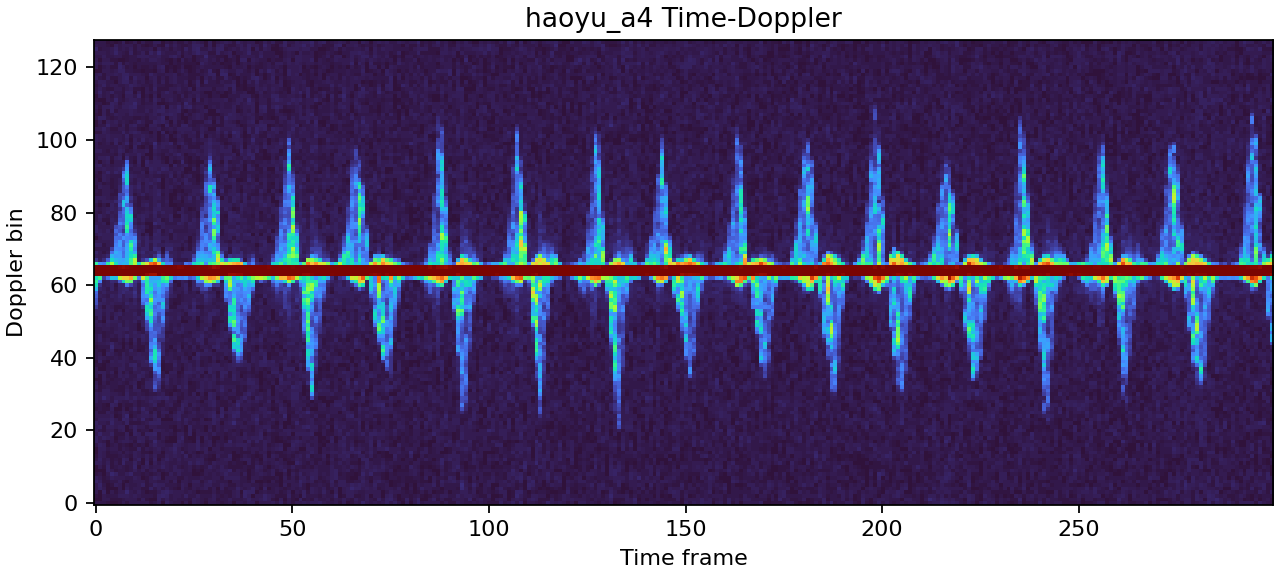
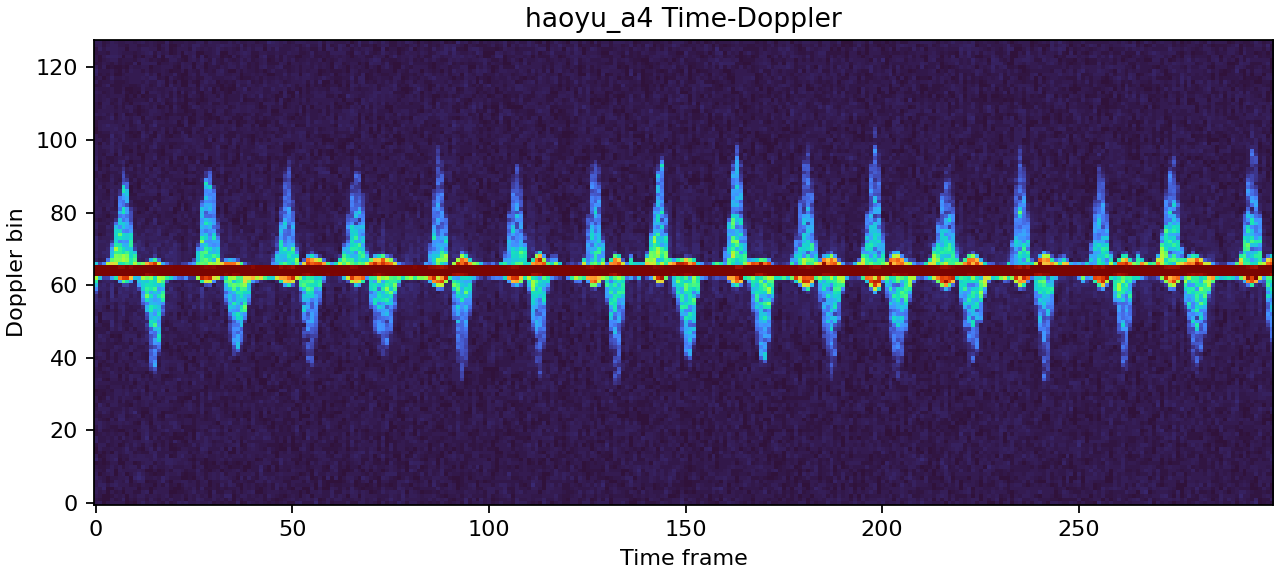
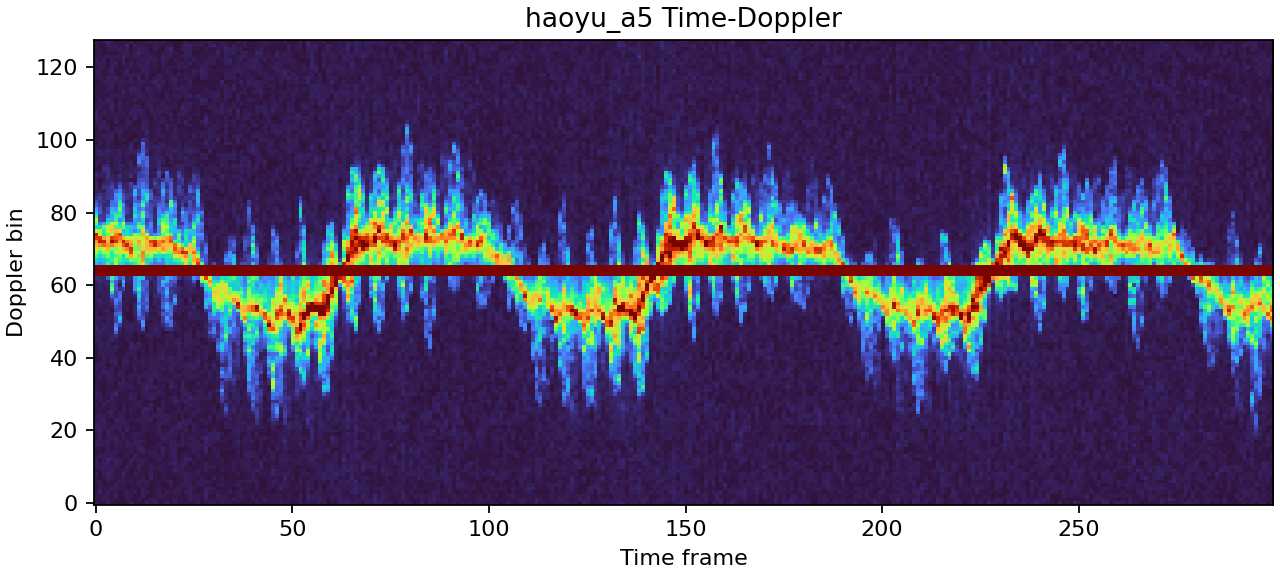
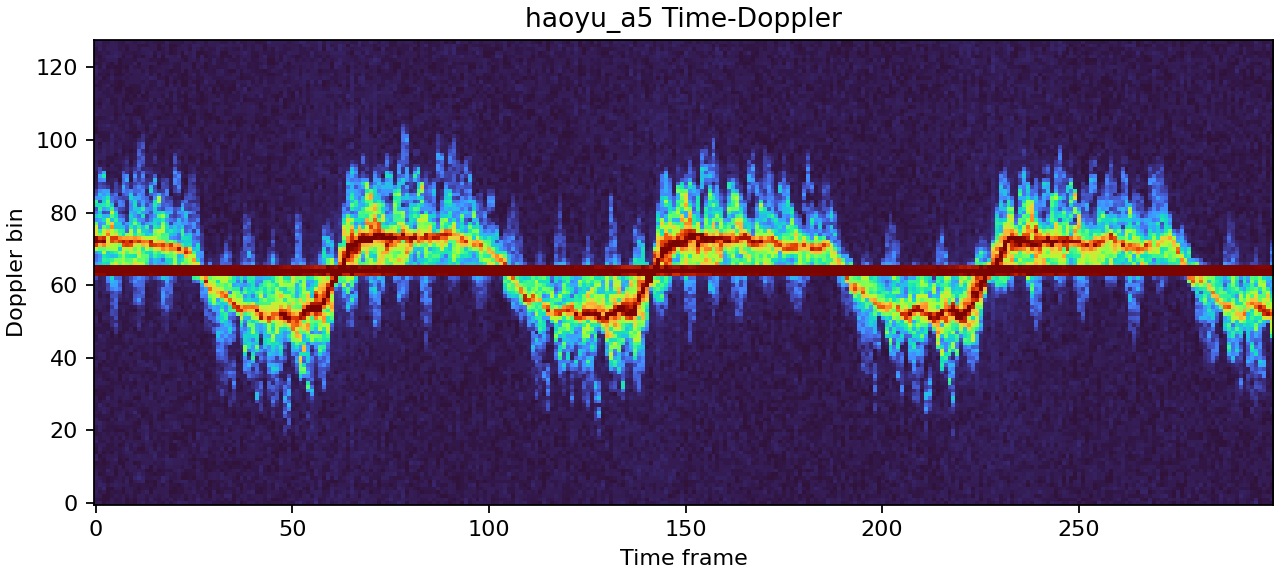
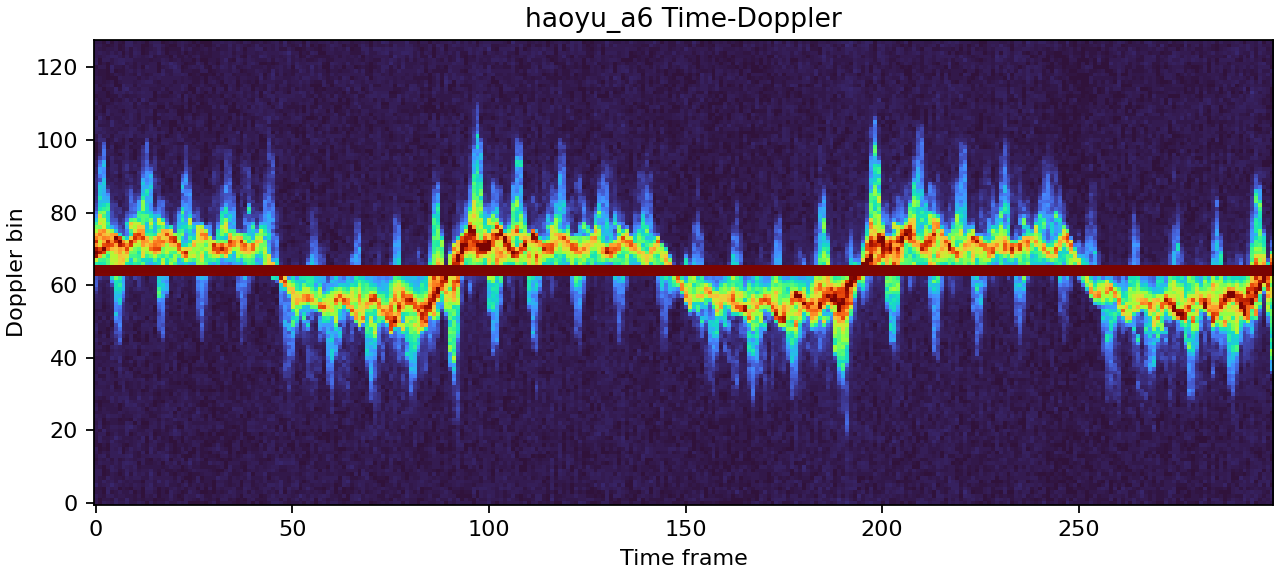
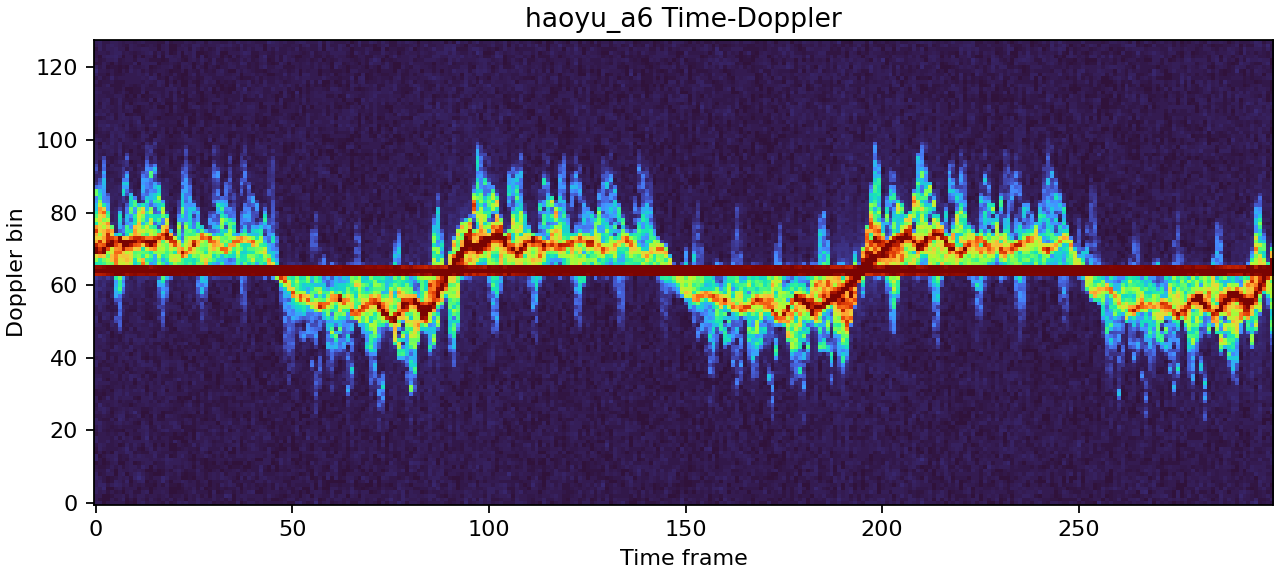
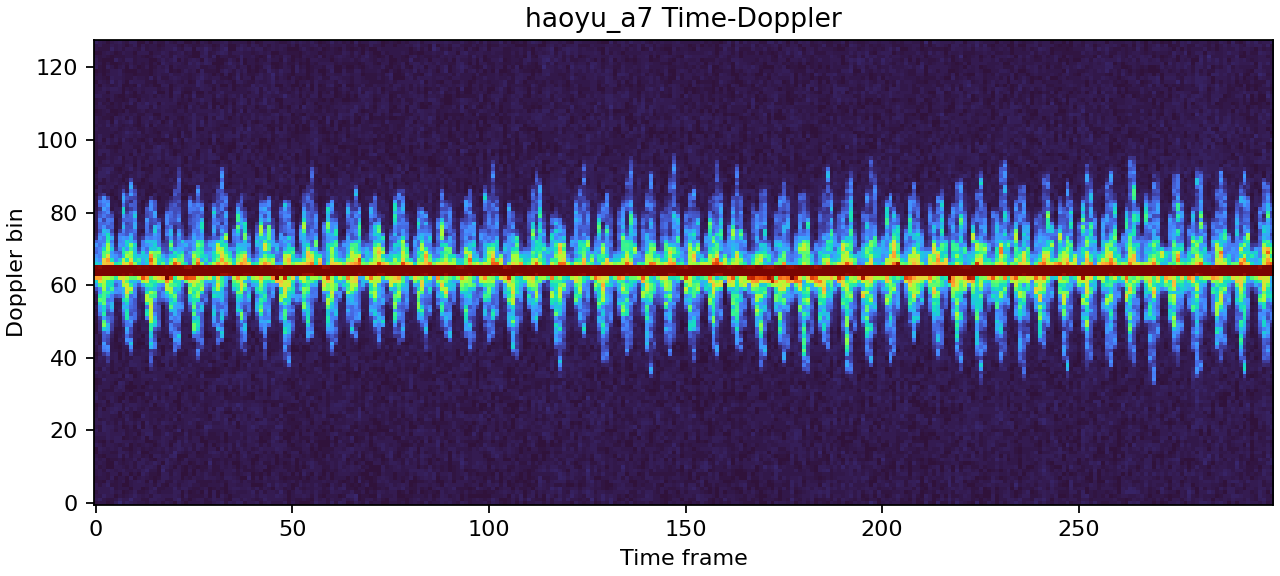
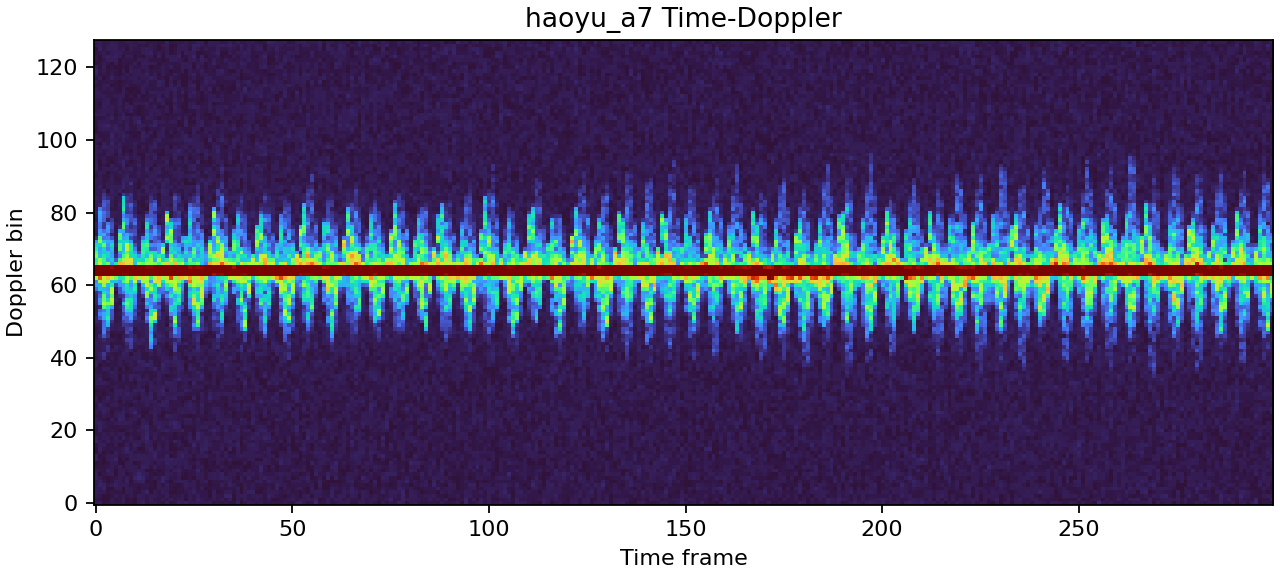
A1
Motion
GT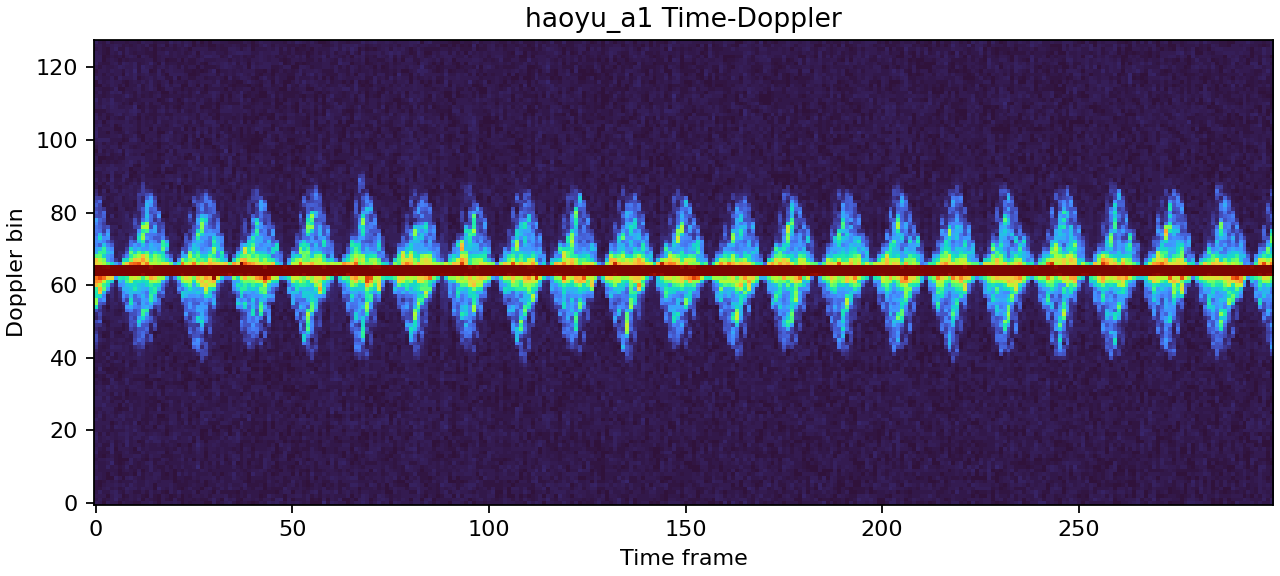
Sim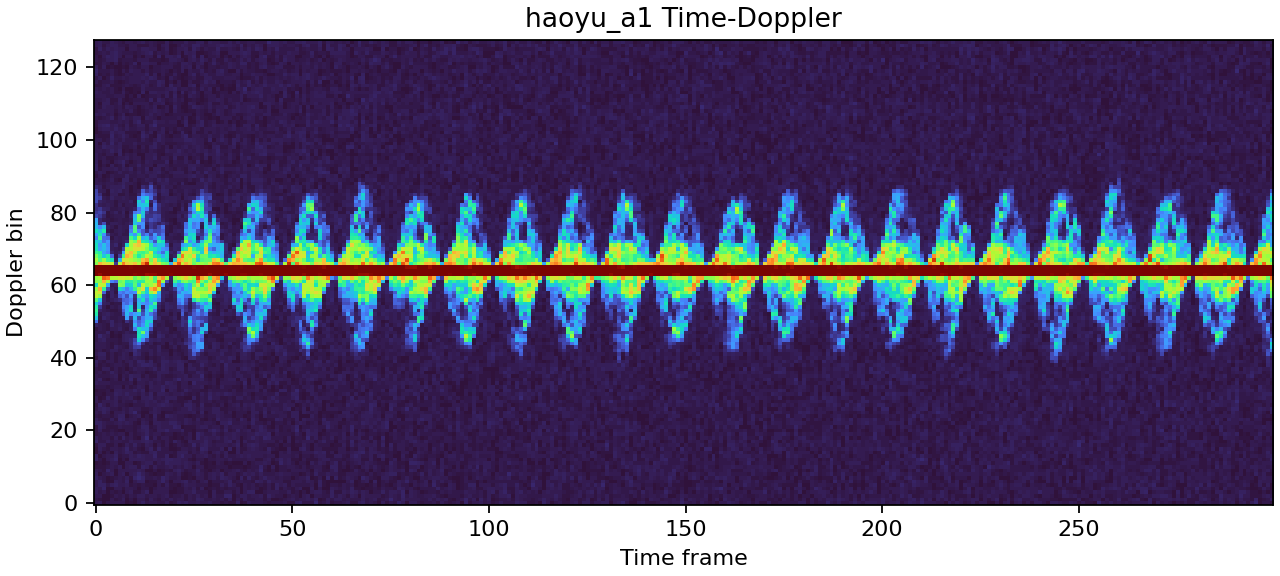
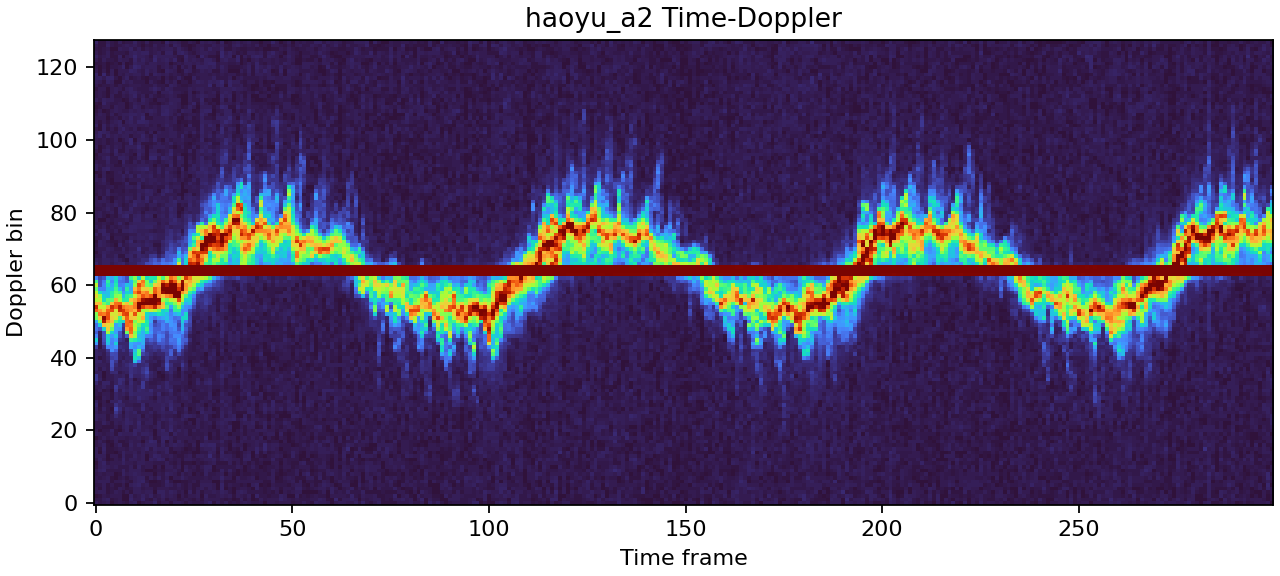
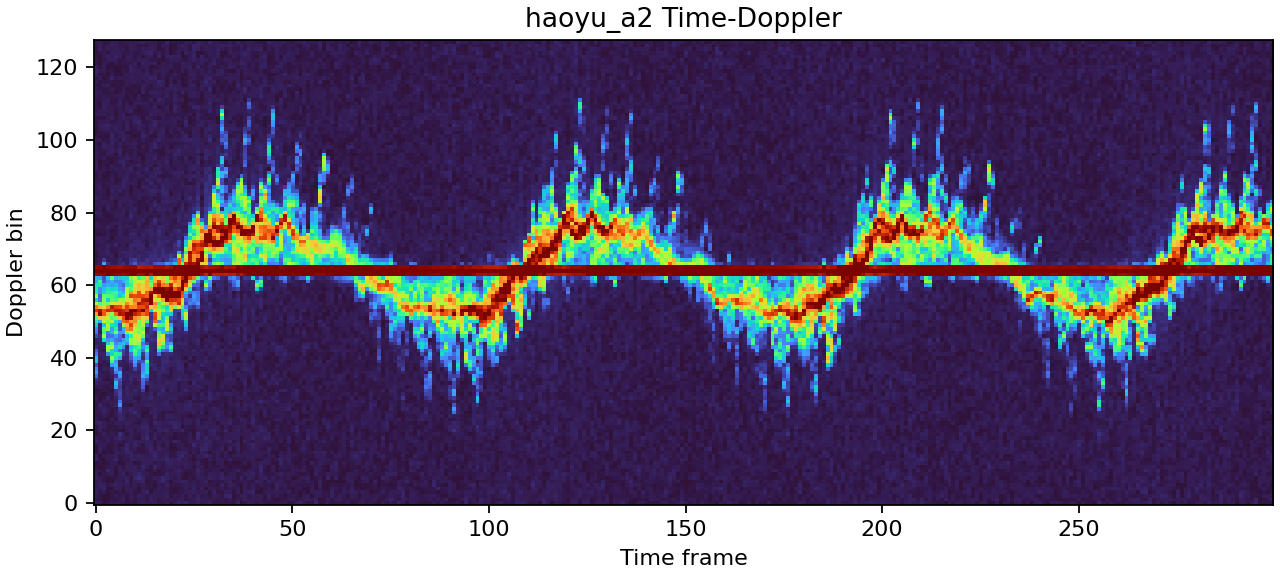
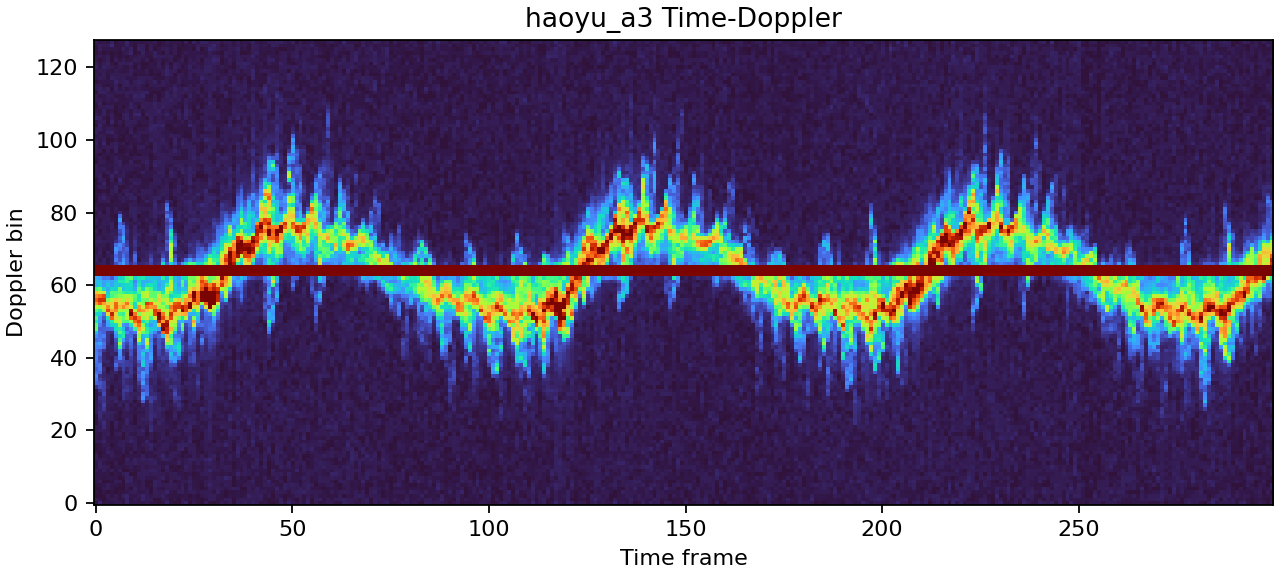
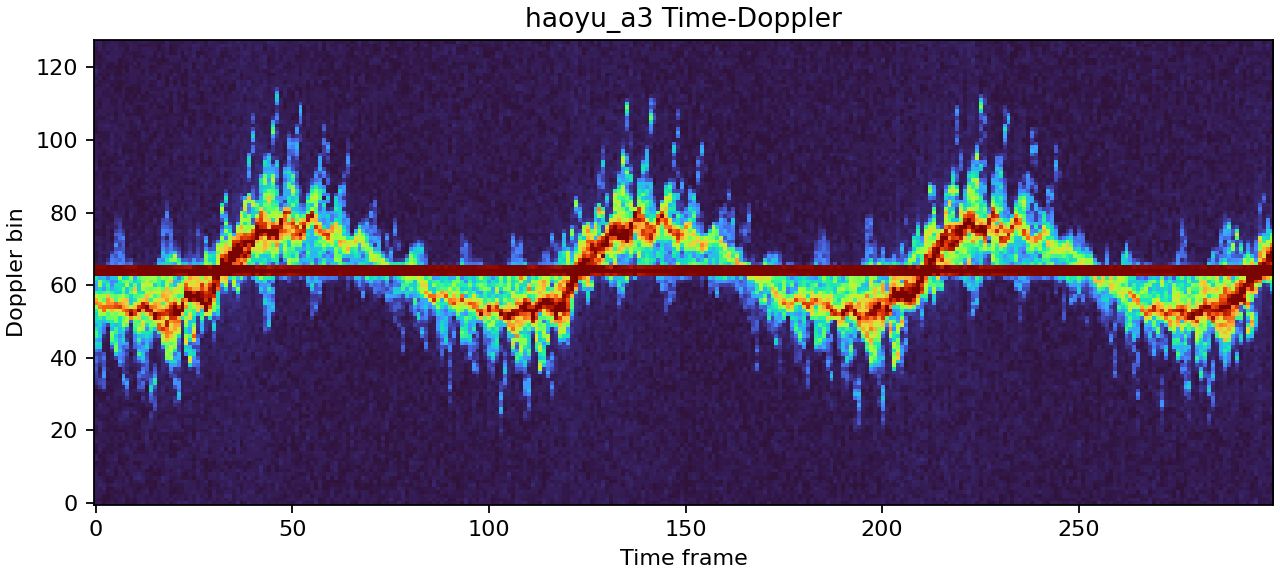
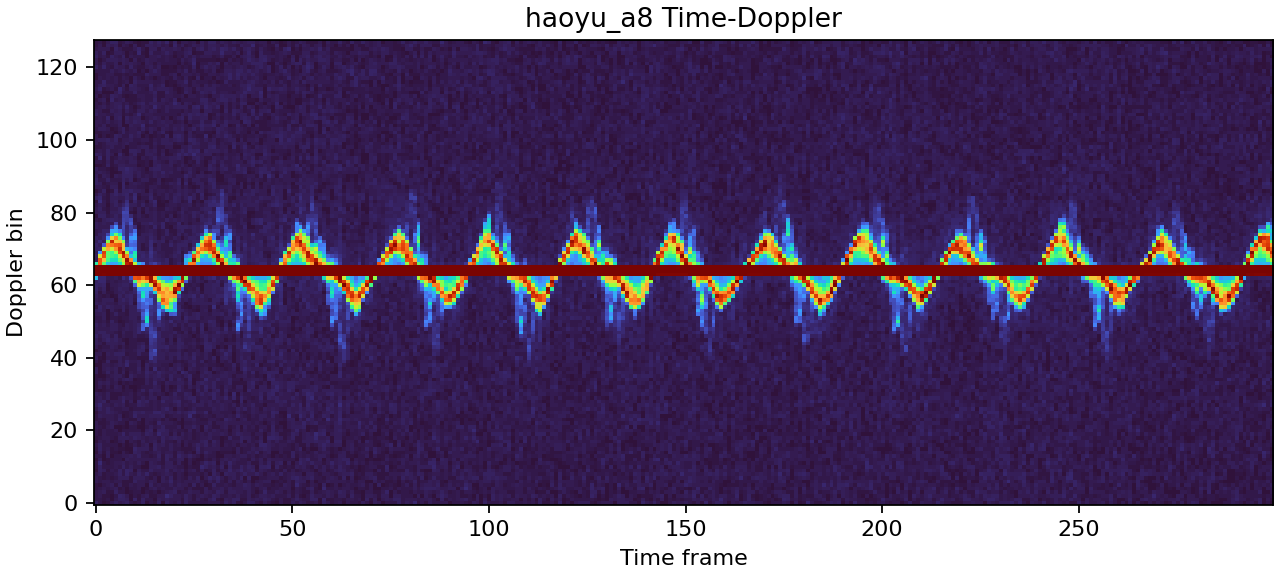
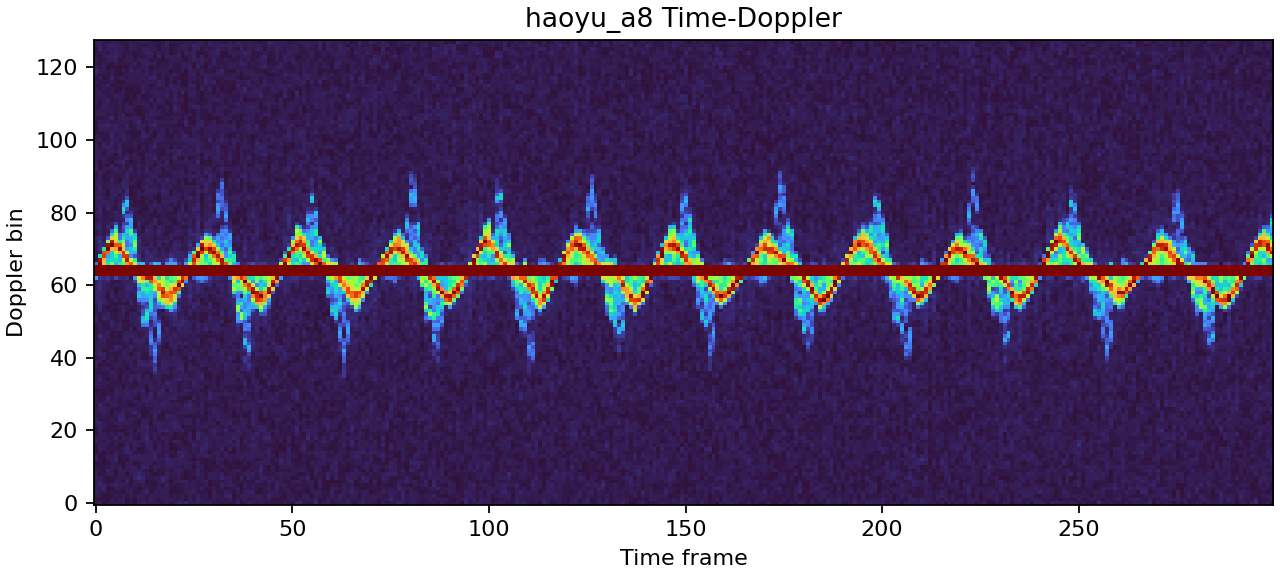
Synthesizing realistic mmWave radar signals from dynamic human meshes and fixed-room indoor scenes.
1Xiamen University 2The Hong Kong University of Science and Technology 3University of North Carolina at Charlotte
†Corresponding Author
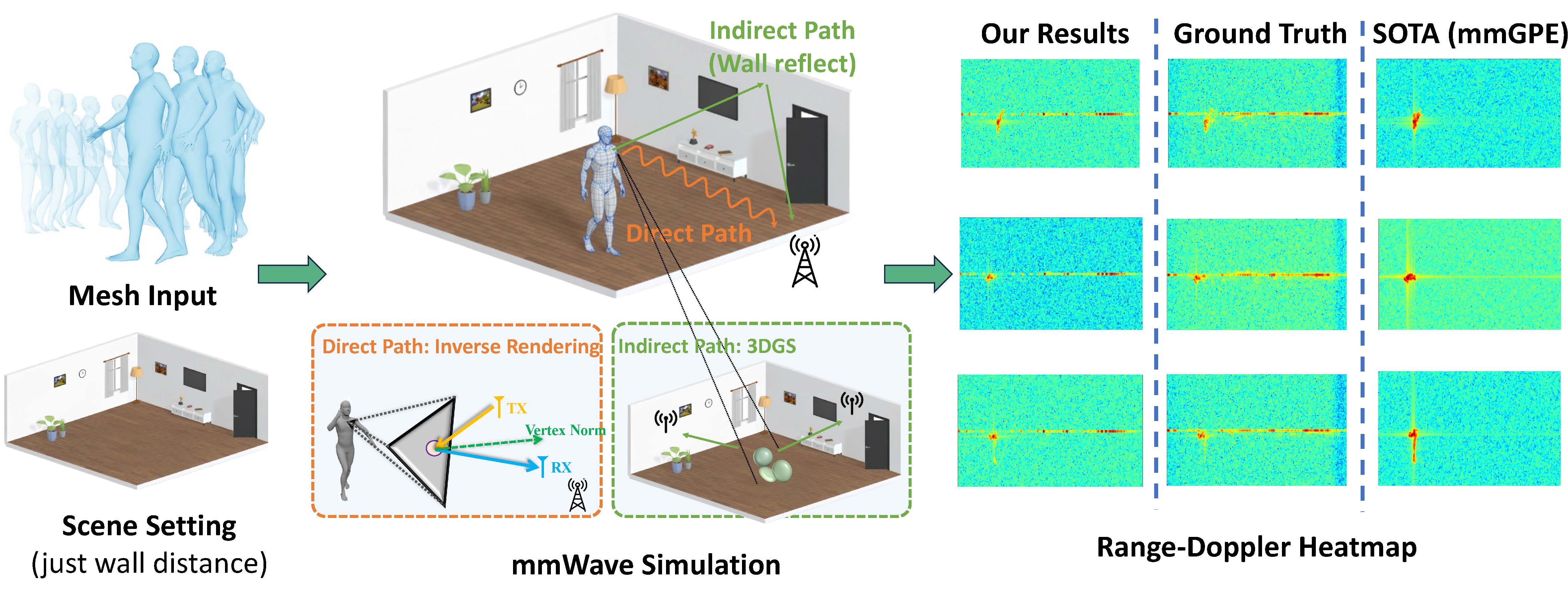
High-fidelity simulation of mmWave radar signals for dynamic human motion is valuable for developing radar-based human sensing models, but collecting accurately labeled measurements for each deployment site remains expensive.
HybridSim synthesizes mmWave radar signals from dynamic human meshes under a fixed indoor room configuration by decoupling propagation into direct inverse-rendering paths and indirect 3DGS-based paths. This hybrid design improves agreement with physically based references while keeping site-specific data augmentation practical.
The primary reflection path is modeled with inverse rendering and a microfacet BRDF over the moving human surface.
3D Gaussian Splatting and virtual receiver geometry approximate room-specific multipath interference efficiently.
Hover over GT or Sim images to magnify them.